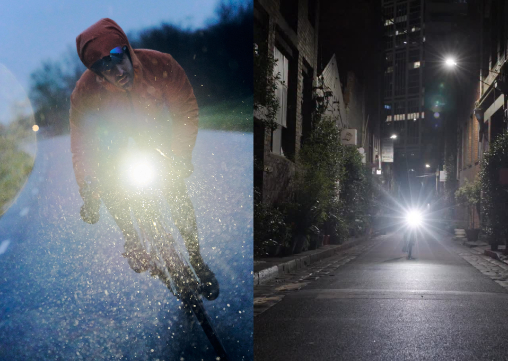

Winter riding has its own rhythm. The roads are quieter, the air is crisp, and early mornings can feel calm before the day begins. But winter also brings shorter days, darker commutes, and lower visibility for everyone on the road.
If you ride through winter, good bike lighting is not optional. It is one of the simplest ways to stay safer, feel more confident, and make sure other road users can see you clearly.
Most riders think about lights for seeing the road ahead. That matters, especially on poorly lit streets, country roads, or trails. But the bigger safety factor is visibility.
Drivers, pedestrians, and other cyclists need to notice you early enough to react. In winter, rain, fog, glare, and low light make that harder.
A strong lighting setup helps in two ways:
Even during daylight hours, winter conditions can reduce visibility enough that running lights all day makes sense.

Not all bike lights are built for the same type of riding.
If you mostly ride in urban areas with streetlights, a compact front light designed to improve visibility may be enough. For darker roads or off-road riding, you will need a more powerful beam that properly lights the surface ahead.
When choosing a front light, look at:
Brightness is measured in lumens.
More lumens are not always better if the beam pattern is poor. A focused beam that lights the road evenly is often more useful than raw brightness.
Cold weather can reduce battery performance. Check realistic run times, especially if you commute daily.
USB rechargeable lights are convenient, but it is worth keeping charging habits consistent through winter. Nobody wants to discover a flat light halfway home.
A light that moves or rattles on rough roads becomes frustrating quickly. Secure mounting matters more than many riders expect.

Rear lights are often underestimated.
A bright, flashing rear light can dramatically improve your visibility in traffic, particularly in rain or mist.
Positioning also matters. Make sure your light is not blocked by a jacket, saddle bag, or mudguard.
Some riders use two rear lights for extra visibility and backup security if one battery runs flat.
Lights do most of the work, but reflective details add another layer of visibility.
Reflective jackets, ankle bands, helmets, and bags catch car headlights well, especially from the side where bike lights can sometimes be less visible.
Moving reflective points, like ankles while pedalling, are particularly noticeable to drivers.
Winter weather changes fast. A setup that works perfectly in summer may not feel adequate in heavy rain or dense fog.
A few small adjustments can make a big difference:
Riding in the dark can feel intimidating at first, especially during the first weeks of winter. But with the right lighting setup, night riding becomes far more comfortable.
You notice road surfaces earlier. Drivers give you more space. Junctions feel safer. And most importantly, you stay visible in conditions where visibility changes quickly.
Good bike lighting is not just another accessory. It is essential winter equipment.
So before your next early morning ride or evening commute, take a few minutes to check your setup. Bright, reliable lights can make every winter ride safer, calmer, and far more enjoyable.








No comments yet. Be the first to comment!