There’s a moment every cyclist eventually faces: you’re far from home, fully in the flow of the ride, when something goes wrong. Maybe it’s a soft hiss from your tyre, a missed shift that turns into silence, or a drivetrain that suddenly gives up. Whether you’re riding MTB trails, smooth tar on a road bike, long gravel routes, or an e-bike, these situations are part of cycling — and knowing how to handle them is what separates a stressful experience from a manageable one.
You don’t need to be a professional mechanic. But a few key roadside repair skills can save your ride.
Punctures are the most common issue you’ll face, but they vary depending on your riding style. Road cyclists often deal with glass and debris, gravel riders with thorns and sharp stones, and MTB riders with cuts from rocks or roots. E-bikes, because of their extra weight, can make even small punctures more problematic.
The key to handling a puncture is not just knowing that you can fix it — but knowing how, depending on the situation in front of you.

Typical roadside puncture situations include:
Practical ways to fix it:
Once you’ve done this a few times, it becomes second nature — and one of the most valuable skills you can have on any ride.
A broken chain always feels dramatic. It usually happens under load — often when climbing or shifting aggressively — and is more common in MTB riding due to torque and rough conditions. Gravel riders can experience it on long climbs, while road cyclists typically see it when chains are worn or poorly maintained.
The good news is that it’s fixable — if you’re prepared.

What helps in this situation:
You’ll need to remove the damaged link, then reconnect the chain using the quick link. It’s a simple process once you’ve practiced it.
Top tip:
Make sure your quick link matches your drivetrain speed (e.g. 10, 11, or 12-speed). Using the wrong one can cause poor shifting or even another failure.
Mechanical systems rely on cables, and when one snaps, things change quickly — but not always as badly as you might think.
If a mechanical brake cable snaps, you still have your other brake. It’s not ideal, but it’s enough to get you home if you ride cautiously and plan your stops.
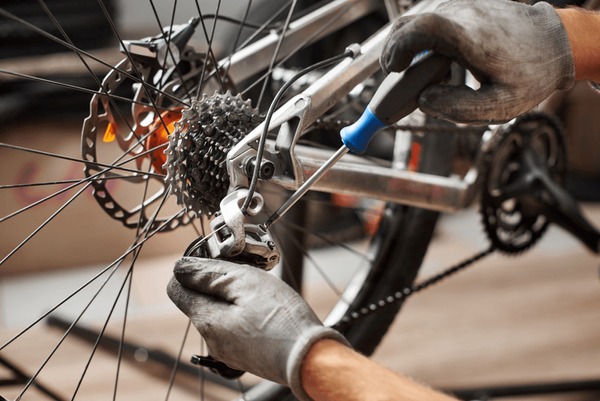
If a gear cable snaps, you’re usually stuck in one gear — but with a bit of knowledge, you can improve the situation:
It’s not a perfect fix, but it can make the ride far more manageable.
Electronic shifting is incredibly reliable, but when it fails, it’s usually due to battery issues.
When the battery dies, shifting stops — but there are still a few things worth knowing.
Practical considerations:
Unlike mechanical systems, this is more about preparation than repair.
Not every problem is obvious. Sometimes it starts with rough shifting or strange noises. On MTB and gravel rides, it’s easy to knock components slightly out of alignment without even noticing.
A bent derailleur hanger is a common example. It can affect shifting performance and, if ignored, lead to more serious damage.
In these cases, the goal isn’t perfection — it’s getting the bike into a rideable state. That might mean small adjustments or simply finding a gear that works and sticking with it.
E-bikes share most of the same mechanical issues as traditional bikes, but they add a layer of electronics and extra weight.
A flat battery is the most common issue, and when it happens, you’re left pedalling a significantly heavier bike. It’s manageable, but noticeable.
Other issues like motor cut-outs or sensor faults are harder to fix roadside, but a few checks can help:
Beyond that, it’s about managing the situation and getting home safely.
Even the best skills won’t help much if you don’t have the right tools. The key is carrying a compact, versatile kit that works across all bike types.
A multi-tool is your most important item. It allows you to tighten bolts, adjust components, and — if it includes one — use the chain breaker for drivetrain repairs.

A mini pump or CO₂ inflator keeps your tyres running. CO₂ is quick and efficient (great for road rides), while a mini pump is slower but reliable in all conditions — especially useful for MTB and gravel.
A spare tube and tyre levers are essential, even for tubeless riders. When a tubeless setup fails, a tube is your backup plan. Tyre levers make removing tight tyres much easier and safer.
A chain breaker and quick link are non-negotiable for longer rides. Without them, a broken chain almost always means the end of your ride.

A plug kit or patch kit helps you deal with smaller punctures quickly, without needing a full repair.
And finally, a tyre boot (or improvised “gator”) can save you from a major cut that would otherwise end your ride completely.
At the heart of all these situations are a few core skills every cyclist should know. These apply across MTB, road, gravel, and e-bikes, and they’re what turn a potential ride-ending problem into a short stop on the side of the road.
Essential roadside repair skills include:
There’s a certain confidence that comes from knowing you can handle problems on the road or trail. It changes how you ride — you’re more willing to explore, go further, and take on new challenges.
Most experienced cyclists will tell you the same thing: the rides where something went wrong are often the ones they remember most. Fixing a puncture in the middle of nowhere or getting a broken bike rolling again isn’t just a hassle — it becomes part of the story.
Because in cycling, it’s not just about the perfect ride — it’s about being prepared for the imperfect ones too.








No comments yet. Be the first to comment!