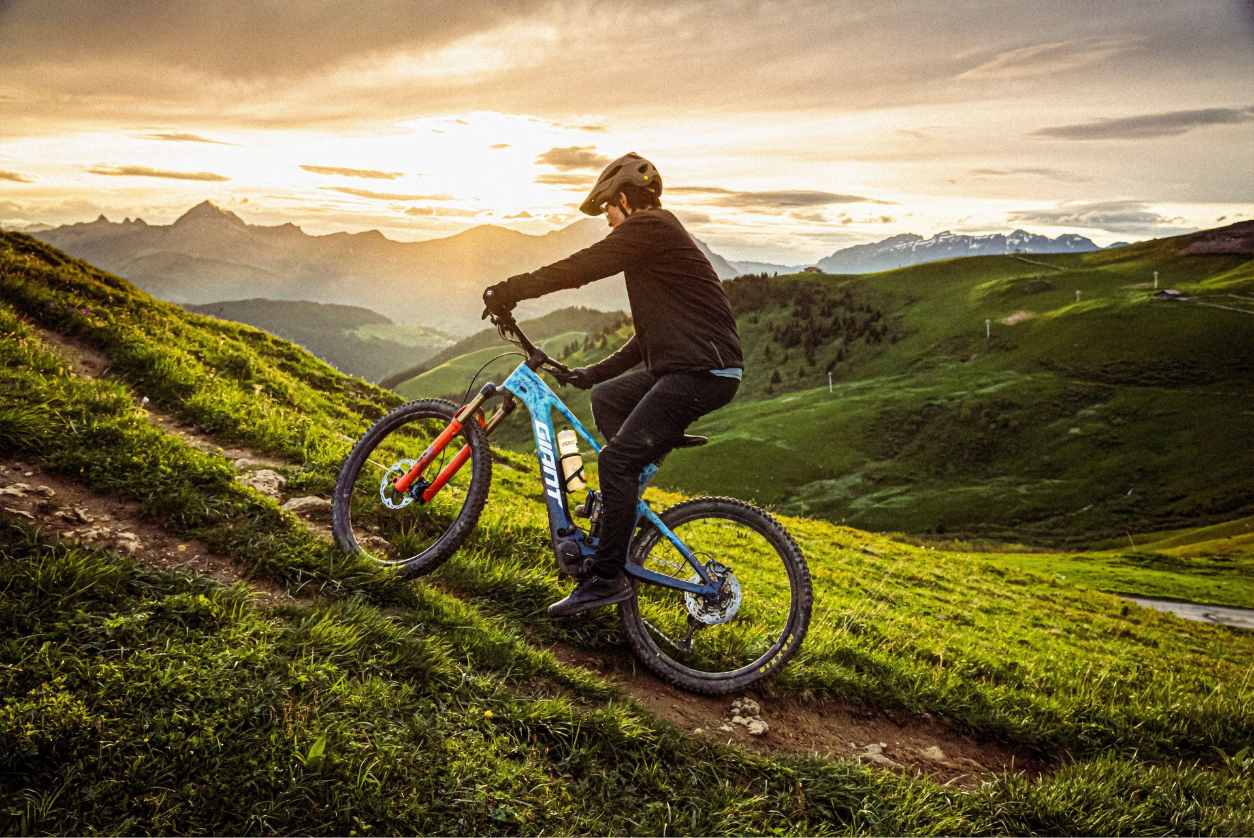
E-bikes have become one of the most argued-about things in cycling — and that’s saying something in a sport where riders can debate tyre pressure like it’s politics. Some cyclists see e-bikes as the future: more distance, more adventure, and more time in the saddle without being destroyed by climbs. Others treat them like the enemy of “real cycling”, calling them cheating, lazy, or basically motorbikes in disguise.
But here’s the thing: most e-bike hate isn’t based on facts. It’s based on emotion. Cycling has always had a culture of suffering — the idea that you must earn every kilometre through pain. So when something comes along that makes riding easier, it doesn’t just challenge fitness… it challenges identity.
Let’s cut through the noise and break down what’s actually true, what’s misunderstood, and what’s just pure hate.
One of the funniest myths is that e-bikes are some brand-new invention that appeared in the last decade. In reality, the idea of electric bicycles goes back more than a century.

As far back as the late 1800s, inventors were already filing patents for electrically powered bicycles. Some of the earliest well-known patents were around 1895 — long before modern cycling even became the global sport we know today. The reason e-bikes didn’t explode back then wasn’t because the concept was bad. It was because the technology wasn’t ready. Early batteries were heavy, weak, and unreliable.
The real breakthrough wasn’t the motor. It was the battery. Once lithium-ion batteries became lighter and more powerful, e-bikes finally became what they were always supposed to be: a bicycle that feels normal, but gives you support when you need it.
This is the most common argument, and it’s also the one that reveals the most about how people view cycling.
If you define cycling as “maximum suffering per kilometre”, then sure — an e-bike reduces suffering. But cycling has never only been about pain. It’s about freedom. It’s about exploration. It’s about being outside, feeling fast, and enjoying the ride.
A pedal-assist e-bike still requires you to pedal. It’s not like a motorbike that pulls you along while you sit back. The motor is simply helping you manage effort, especially on climbs or into strong wind. You’re still riding — you’re just riding smarter.
And honestly? Calling it cheating is like saying gears are cheating. Or carbon frames. Or aero wheels. Cycling has always embraced technology… until the technology challenges people’s pride.
This one is more insulting than it is accurate.
The truth is, e-bikes are used by a huge range of riders. People buy them to commute without arriving sweaty. Riders returning from injury use them to stay active without overloading the body. Older cyclists use them to keep riding for years longer than they otherwise could. Some people use them simply because they want to ride further and explore more without turning every ride into a battle.
In many cases, e-bikes don’t replace cycling — they prevent people from quitting it.
This myth sounds logical until you think about it properly.
Yes, if you ride a normal bike and an e-bike at the same speed, the normal bike requires more effort. That part is true. But fitness isn’t only about intensity — it’s also about consistency.
A lot of people ride more often on an e-bike because it removes the biggest barriers: exhaustion, time pressure, and fear of long climbs. And when you ride more often, your total weekly exercise can end up being similar — sometimes even higher — because you’re spending more time moving.
E-bikes don’t remove exercise. They remove the “I’m too tired today” excuse.
This is where a lot of confusion comes from.
Most proper e-bikes are pedal-assist, meaning the motor helps only when you pedal. They’re also speed-limited — once you reach a certain speed, the motor stops assisting. So if you want to go faster, you still have to do the work yourself.
The bikes that feel like motorbikes are usually illegal or modified high-power machines — the ones with throttles and crazy speeds. Those shouldn’t be grouped in with normal e-bikes, because they’re not the same thing at all.
A legal e-bike is still a bicycle. It just has support.
This one has some truth in it — but it’s often exaggerated and blamed on the wrong thing.
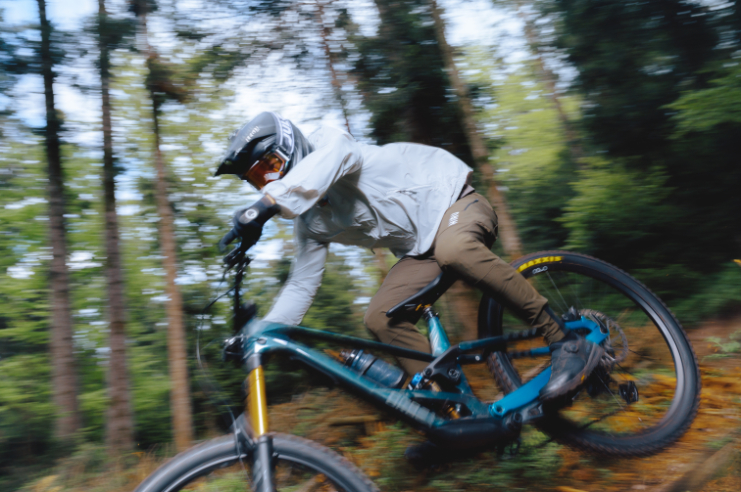
Trails don’t get damaged because a bike has a motor. They get damaged because of rider behaviour, conditions, and tyre traction. If someone rides in wet conditions, spins tyres uphill, and brakes badly downhill, they’ll cause damage — whether they’re on an e-bike or a normal bike.
E-bikes can cause more wear in certain situations because they’re heavier and allow people to climb repeatedly. But that’s not a reason for hate — it’s a reason for better trail rules, smarter trail design, and riders respecting conditions.
E-bikes can be dangerous in the wrong hands — but so can any bike.
The biggest issue is that e-bikes accelerate quicker and weigh more. That means beginners need to learn control and etiquette. But a responsible rider on a legal e-bike isn’t automatically more dangerous than a normal cyclist. The danger usually comes from speed, poor awareness, and reckless behaviour — not the motor itself.
In fact, many modern e-bikes are designed with better brakes, better stability, and stronger components because brands know the bikes will carry more speed and weight.
Here’s the honest truth: e-bikes get hate because they challenge cycling culture.
Cycling has always been about earning the ride. The climb. The suffering. The story. E-bikes make it possible to ride hard routes without being destroyed, and that triggers people who built their identity around pain.
But cycling isn’t a religion. It’s not supposed to be a suffering competition.
It’s supposed to be fun.
If an e-bike helps someone ride more, explore more, and stay in cycling longer — that’s not ruining the sport. That’s growing it.
Yes, e-bikes make riding easier. That’s the point. But easier doesn’t mean fake. It means accessible. It means more people riding, more often, in more places, with bigger smiles.
And if someone wants to suffer on a normal bike? Respect. That’s still beautiful.
But if someone wants support to ride further, climb more, and enjoy the journey? That’s also cycling.
The real enemy isn’t e-bikes.
It’s ego.







No comments yet. Be the first to comment!