
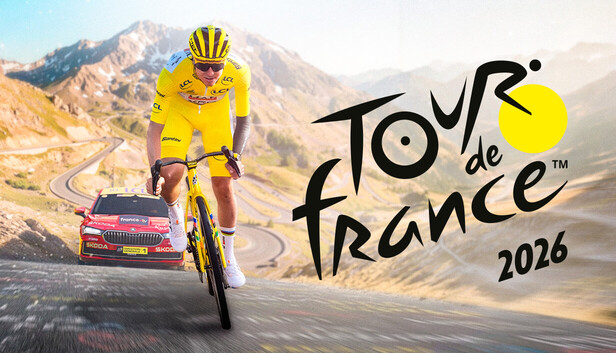
There is something special about July.
For cycling fans, it means long afternoons glued to the television, watching the world's best riders battle through mountain passes, sprint through historic towns, and suffer their way across France in pursuit of the most famous yellow jersey in sport.
The Tour de France is unlike any other race on the calendar. Every year the route changes, creating a new puzzle for riders to solve. Some editions favour climbers. Others reward powerful time trialists. Occasionally, the organisers produce a route that seems designed to create chaos.
Looking at the 2026 Tour de France route, chaos might be exactly what we're getting.
Before we get carried away with what lies ahead, it's worth remembering how dominant Tadej Pogačar was in 2025.

The Slovenian claimed his fourth Tour de France title, further strengthening his claim as one of the greatest riders of his generation. Once again, he proved why so many teams spend the entire season trying to find a way to beat him.
The scary part?
The 2026 route may suit him even better.
When casual fans think about the Tour de France, they often imagine a race around France with some mountains thrown in.
In reality, the route is often the biggest talking point long before the race starts.
A route packed with time trials might favour a rider like Remco Evenepoel. A mountain-heavy edition could play directly into the hands of Jonas Vingegaard or Tadej Pogačar. Add cobblestones, gravel sectors or crosswind-prone roads and suddenly the race changes completely.
It's one of the reasons the Tour remains fascinating after more than a century.
The route isn't just a map.
It's the first battle of the Tour.
One of the great things about the Tour is how it showcases some of the most iconic cycling locations in the world.
The Pyrenees are usually the first real examination of a rider's Tour ambitions.

Located along the border between France and Spain, these climbs have a habit of exposing weaknesses early. Riders who looked comfortable on the flat stages suddenly find themselves struggling on gradients that never seem to end.
For fans, the Pyrenees often provide the first genuine clues about who can win the Tour.
If the Pyrenees ask the questions, the Alps often provide the answers.
No mountain range is more closely associated with Tour de France history. This is where champions are made, where careers are defined, and where unforgettable attacks become part of cycling folklore.
When the race reaches the Alps, everyone knows the stakes.
These regions don't receive the same attention as the Alps or Pyrenees, but they frequently produce some of the most entertaining racing.
The roads are often narrower, the climbs less predictable, and the opportunities for breakaways much greater.
Sometimes it's the stages nobody talks about beforehand that end up stealing the show.
Ask ten cycling fans to name the most famous climb in the world and chances are most will give the same answer.
Alpe d'Huez.
The mountain has become synonymous with the Tour de France. Its 21 switchbacks, packed roadside crowds and incredible atmosphere have created some of the sport's most memorable moments.
Even people who don't follow cycling closely have probably seen photographs of riders climbing through walls of spectators on Alpe d'Huez.

That's why the biggest talking point for 2026 is the decision to feature the legendary climb twice during the final weekend.
Not once.
Twice.
By the time the riders reach those stages, they'll already have nearly three weeks of racing in their legs. Fatigue will be everywhere, recovery will become critical, and every attack could decide the Tour.
It's exactly the sort of finale fans dream about.
The race starts in Barcelona before crossing into France and covering more than 3,300 kilometres on its journey to Paris.

The opening week brings mountain challenges much earlier than usual, meaning riders won't have the luxury of gradually finding their form.
The middle section of the race features a mixture of rolling terrain, sprint opportunities and tactical stages where breakaways could flourish.
Then comes the decisive final week.
A late individual time trial adds another layer of intrigue before the riders head into the Alps for what promises to be a spectacular conclusion.
For fans who love mountain stages, this route is difficult not to get excited about.
Let's start with the obvious name.
Whenever Pogačar lines up at a Grand Tour, he starts as one of the favourites. The combination of climbing ability, time-trialling strength and attacking instinct makes him incredibly difficult to beat.
The 2026 route appears tailor-made for his aggressive style of racing.
If there is one rider capable of matching Pogačar in the high mountains, it's Vingegaard.
The Dane has already shown that he can beat the Slovenian over three weeks and will relish the amount of climbing on this year's route.
If the race turns into a pure mountain battle, nobody should be surprised to see him fighting for yellow deep into the final week.
Every year feels like another step forward for Evenepoel's Tour ambitions.
The Belgian remains one of the best time trialists in the world and continues to improve as a Grand Tour rider. Whether he can consistently match the two dominant climbers remains the big question.
Every Tour needs a few surprise contenders.
Riders such as João Almeida and Juan Ayuso have the talent to challenge for podium positions, while younger stars will be eager to announce themselves on cycling's biggest stage.
History tells us that every Tour produces at least one unexpected story.
One of the mistakes newer fans make is thinking the Tour is only about the General Classification.
Some of the most entertaining racing comes from riders who have no interest in the yellow jersey.
Sprinters will battle for stage wins and the green jersey.

Climbers will target the famous polka-dot jersey.
Breakaway specialists will spend three weeks searching for that one magical day where everything comes together.
Then there are riders like Mathieu van der Poel, Tom Pidcock and Julian Alaphilippe—riders who can turn an ordinary stage into absolute chaos with a single attack.
Those moments are often what people remember long after the Tour has finished.
Every year cycling fans convince themselves that the upcoming Tour is going to be special.
But this time there may be good reason.
The route is aggressive.
The mountains arrive early.
The final week looks brutal.
And the battle between Pogačar, Vingegaard and Evenepoel could be the strongest we've seen in years.
Whether you're a lifelong cycling fan or someone who only tunes in during July, the 2026 Tour de France is shaping up to be one worth following.
Because if there's one thing history has taught us, it's that the Tour de France always delivers.
And when Alpe d'Huez awaits in the final weekend, anything can happen.







No comments yet. Be the first to comment!