 Skills & Coaching · Nigel Laver
By Nigel Laver · PMBIA Qualified MTB Skills Instructor · Cycle Lab
''Four years of teaching MTB skills has taught me one thing: the skills most riders actually need are nothing like the ones they think they're going to learn.''
Nigel Laver here from Cycle Lab. The moment most new riders hear the word "skills" they start sweating - picturing massive jumps, rooftop ramps, or some instructor making them wobble around cones when all they want is to not fall off. Relax. What I teach in a two-hour lesson is nothing like that. It's the fundamental body position stuff that nobody ever shows you - and trust me, I rode MTB for 15 years without knowing any of it. I only figured it out when I started training as a PMBIA instructor. Game changer doesn't cover it.
Once a new rider gets into the saddle, they think that's home until they stop. Makes sense - except the moment the trail gets rough, that's exactly the wrong place to be. All your weight piles onto the saddle and suddenly you're this top-heavy, wobbly spinning top that the bike is desperately trying to throw off.
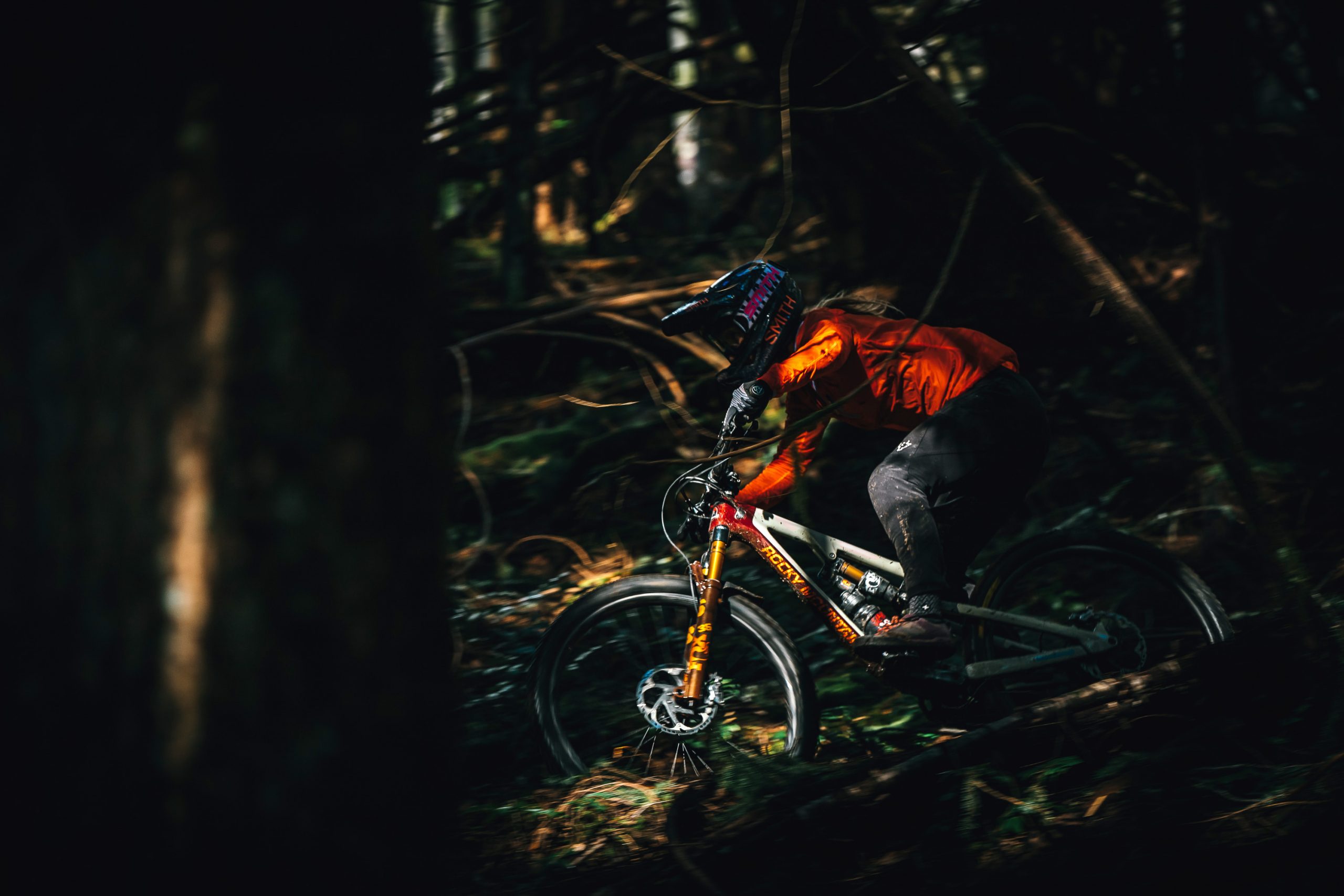
Stand straight up on the pedals - knees flat, weight centred over the cranks - and your centre of gravity drops right down to axle level. Now the bike can bounce and buck all it wants underneath you. You're not fighting it anymore. You're just along for the ride, in control. Everything else in this list builds on this one thing.

Standing position - weight over cranks, centre of gravity low
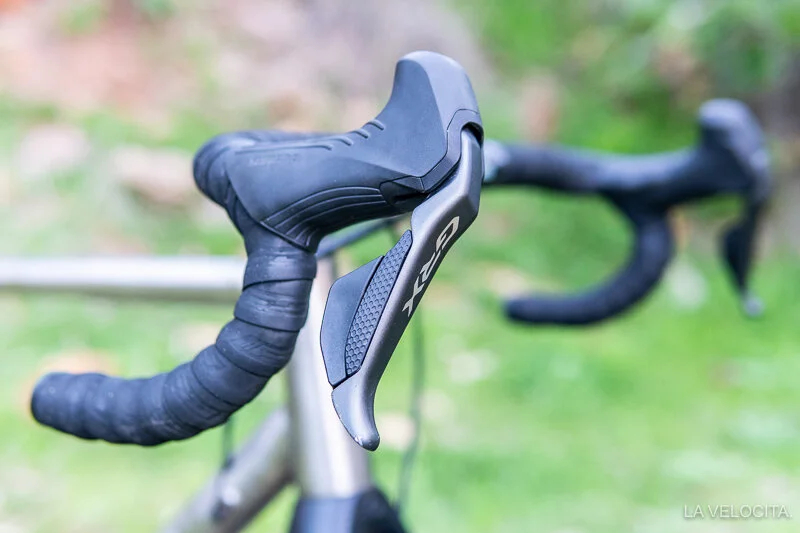
Most modern MTBs come with a dropper post - that's the telescopic seatpost with the lever on the bar that lets you slam the saddle down and bring it back up whenever you want. If you're shopping for a bike right now, get one with a dropper. Non-negotiable.
Here's the move: before you stand up (see Skill One), drop the saddle first. Hold the lever, sit briefly to let it drop, release, then stand. With the saddle out of the way the bike has so much more room to move underneath you - up, down, side to side. It can absorb way more without trying to eject you. Get into the habit of dropping it any time you stop pedalling over technical ground. It feels weird at first, then it feels obvious, then you can't imagine not doing it.
"Any time you're freewheeling and not pedalling, you could be standing with the saddle down."
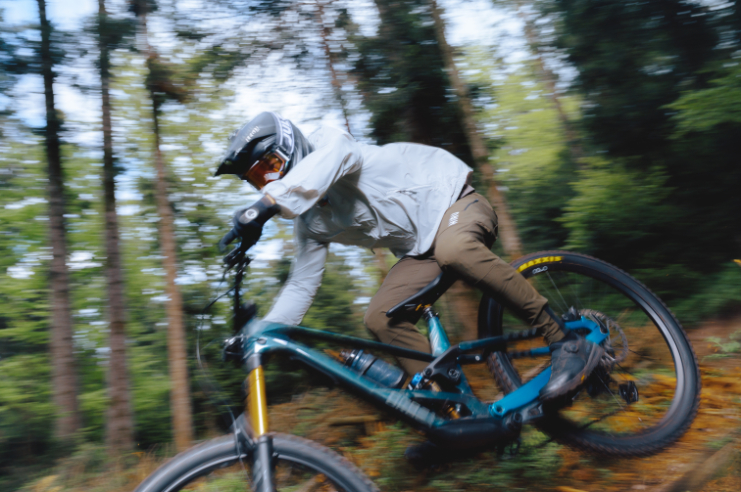
Loads of riders do this without knowing why - and because they don't know why, they do it half-heartedly and wonder why it's not helping. Elbows out and arms bent gets your chest lower and closer to the bars, and turns your arms into two big live shock absorbers.
We all think the shocks do the work. They don't - not for your body anyway. The suspension deals with the impact to the bike. Your arms and heels deal with the impact to you. Think of it like a cartoon car: shocks extend to go over something, then retract to come back down. Your bent arms work the same way but in reverse - your head stays level while the bike moves up and down beneath you. Once you actually feel it click, you'll never go back to riding stiff-armed again.
If this is all brand new to you, come find one of our instructors at the Cycle Lab Bike Park and ask for the body position lesson. Seriously - best two hours you'll spend on a bike.

Elbows out, arms bent - your built-in suspension system
Go watch some XCO World Cup footage on YouTube right now. Seriously, pause and go look. Every single elite rider - men and women - has their heels dropped. On terrain that savage, you can't afford not to.
Dropping your heels does two things. First, it keeps your leg straight over the crank which keeps your hips in the right place. Bend your knees instead and your weight drifts backwards, the front wheel goes light, and grip disappears. Second, you get a bit of free suspension travel before your knees even need to come into it. A lot of the time, that heel drop is all you need to stay balanced and in control.
Picture a series of berms - between each one you're standing, heels dropped, absorbing the trail. Leg stays straight, hips stay centred, you roll into the next berm ready to hit it properly. That's the move.
Quick note: This is for moderate terrain - not big drops or steep roll-downs. Those have their own technique and their own lesson. And yes, even with perfect skills you can still break bones. That's just MTB.
If I had a R100 for every rider I've watched white-knuckling their rear brake while the back wheel skids sideways, I'd be on a beach somewhere. At some point someone - a parent, a mate - told them the front brake will send them over the bars. I get it. But that advice causes way more crashes than it prevents.
Your front brake does most of the stopping. That's physics - braking loads the front wheel, which is exactly why performance cars have bigger front discs. Try this: find a flat open bit of ground, no one around. Stand up, elbows bent, heels dropped. Start squeezing the front brake a little harder with each run. Brace your shoulders to stay forward. Keep going until you feel how it actually works. You're not yanking it. You're learning to modulate it.
"With good body position and front brake control, you can stop in a third of the distance. A third."
Panic braking goes the same way every time - grab the rear, rear wheel locks, bike slides, rider either eats dirt or in desperation yanks the front brake they've never touched before. Same result. The front brake isn't the dangerous one. Used with the right body position it's the one that actually keeps you safe.
Your front brake is like your mother-in-law - deserves respect, can't be ignored. Get it dialled and suddenly you can brake late into corners, creep down sketchy descents in full control, and ride with a confidence that wasn't there before.

Front brake control - confidence and safety in one
Five skills nobody told you about. Not tyre pressure, not nutrition, not which multi-tool to pack. Those things are fine but they're secondary. These are the skills riders come looking for after their first few tumbles - and honestly, they should be handed out with every new bike purchase.
And the biggest eye-opener for experienced riders in the same lesson? Braking. Almost none of them have ever properly used their front brake. Some have spent years actively trying to weight the rear wheel when stopping - the exact opposite of what you should be doing. One session with the right drills and the penny drops hard.
Find a qualified MTB skills instructor and go work through this stuff properly. Your riding will change. Some of those fears you've been carrying around? Gone.






No comments yet. Be the first to comment!