
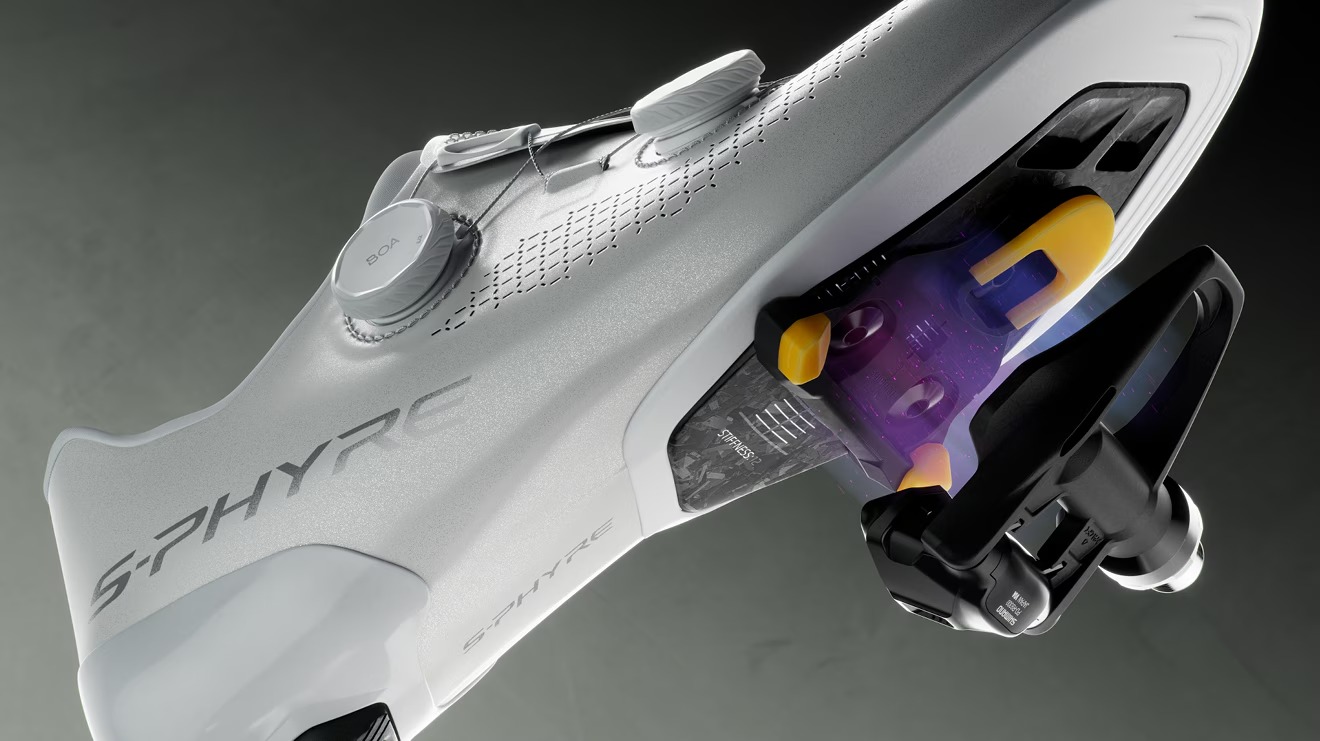
For more than two decades, Shimano's SPD-SL pedal system has been a favourite among road cyclists, from weekend riders to professional racers. Known for its reliable performance, secure connection and efficient power transfer, it has become one of the most recognisable road cycling pedal systems.
Now, Shimano is introducing something new: SPD-SLR, a redesigned road pedal and cleat system that changes how your cycling shoes connect to your pedals. Alongside the new system comes an updated generation of Shimano road cycling shoes, including the premium S-Phyre RC910 and RC810.
But what has actually changed? Is the new technology worth the investment? And if you're already riding with Shimano SPD-SL pedals and shoes, should you consider upgrading?
Let's take a closer look at what makes the new Shimano SPD-SLR system different and why it could be the next upgrade for your road cycling setup.

Shimano's SPD-SL system has been around since 2003, making it one of the longest-standing road cycling pedal standards. Its latest development, SPD-SLR, represents a significant redesign of the connection between the pedal, cleat and cycling shoe.
Rather than simply introducing lighter pedals, Shimano has reworked the entire interface to create a more direct connection between the rider and the bike.
The main improvements focus on four areas:
The new range launches with two pedal options: the flagship Dura-Ace PD-R9300 and the Ultegra PD-R8200. Both feature the new SPD-SLR interface and are designed to deliver a stable, efficient platform for road cycling.
Shimano has introduced SPD-SLR across its Dura-Ace and Ultegra road pedal ranges. While both share the same new cleat system, there are differences in their construction and intended performance level.


The Dura-Ace PD-R9300 is Shimano's flagship road pedal, designed for competitive cyclists and riders who want high-end performance without compromise.


The Ultegra PD-R8200 brings the new SPD-SLR technology to a more accessible performance level. It shares the redesigned pedal interface and lightweight carbon-composite construction, making it an excellent option for serious enthusiasts and regular road cyclists.
Which should you choose? Dura-Ace is the premium option for competitive riders looking for the lightest and most refined setup. Ultegra offers much of the same new-system technology and is an excellent choice for riders who want high performance without necessarily investing in flagship components.
One of the biggest improvements in SPD-SLR is its reduced stack height. But what does that actually mean for your riding?
Stack height is the distance between the pedal axle and the sole of your cycling shoe. The smaller this distance, the closer your foot sits to the centre of the pedal axle.
The new SPD-SLR system reduces stack height by approximately 2.3mm compared with the previous SPD-SL system. This creates a more direct connection and can improve the feeling of stability when pedalling, climbing or accelerating.
Shimano has also redesigned the engagement mechanism. The new system has a wider catch zone and a reduced engagement angle of 10.5 degrees, compared with 15.5 degrees on the previous SPD-SL system. In everyday riding, this means clipping into your pedals can feel quicker and more intuitive, particularly when setting off after stopping at a traffic light or junction.
There are also weight improvements across the range.
| Pedal model | System | Approximate weight (pair) |
|---|---|---|
| Dura-Ace PD-R9100 | SPD-SL | 237g |
| Dura-Ace PD-R9300 | SPD-SLR | 227g |
| Ultegra PD-R8000 | SPD-SL | 249g |
| Ultegra PD-R8200 | SPD-SLR | 230g |
Although the weight savings are relatively small, the improvements in engagement, stack height and pedal stability make the new generation more interesting than a simple weight reduction.
A great pedal system is only part of the equation. Your cycling shoes play an equally important role in how comfortably and efficiently you transfer power to the pedals.
To complement the new SPD-SLR system, Shimano has introduced two updated road cycling shoes: the premium S-Phyre SH-RC910 and the performance-focused SH-RC810.


The S-Phyre RC910 is Shimano's flagship road racing shoe, designed for competitive cyclists and riders who demand maximum performance from their equipment.
Its updated construction focuses on improving foot stability, comfort and the overall connection between the rider and the bike.
The combination of the updated fit, heel support and stiff carbon construction is designed to keep your foot secure while allowing natural forefoot movement during pedalling.


The RC810 brings many of the latest Shimano shoe developments to a more accessible performance category. It is designed for cyclists who want a race-inspired shoe that works equally well for regular training and longer road rides.
For riders who want the benefits of Shimano's latest road shoe technology without necessarily purchasing the flagship S-Phyre model, the RC810 is an appealing option.
Shimano has already built a strong reputation for road cycling shoes. Previous models such as the S-Phyre RC903 and RC8 RC703 offered excellent stiffness, secure fit systems and dependable performance.
So why consider the newer generation?
The biggest changes are found in the fit, foot stability and integration with the new pedal system.
| Feature | Previous generation | New generation |
|---|---|---|
| Fit technology | Previous Dynalast design | Dynalast 2.0 |
| Heel support | Previous heel construction | Updated heel stabilisation and carbon-fibre heel cup on RC910 |
| Fit adjustment | Previous BOA configurations | Dual BOA Li2 adjustment |
| Upper construction | Previous-generation upper | Updated foot-wrapping design |
| Cleat positioning | Traditional SPD-SL adjustment | Updated SPD-SLR positioning on compatible shoes |
| Pedal integration | SPD-SL system | Optimised for SPD-SLR |
For beginners, the important thing to understand is that a cycling shoe should do more than simply attach your foot to the pedal. It should hold your foot securely, distribute pressure comfortably and provide a stable platform throughout your pedal stroke.
The newer shoes are designed to improve these aspects while working with Shimano's redesigned pedal and cleat system.
One of the most important changes is the introduction of new SPD-SLR cleats.
Cleats are the small attachments fitted to the bottom of your cycling shoes. They connect your shoes to the pedals, allowing you to clip in and transfer power throughout your pedal stroke.
The new SPD-SLR cleats have been redesigned to reduce weight, improve positioning and work with the new pedal mechanism.
There are four options:

Float refers to the amount of rotational movement your foot can make while remaining clipped into the pedal. Some movement can help accommodate natural foot positioning and reduce unwanted strain.
For most beginners, a cleat with some float is a sensible starting point. However, the right option depends on your individual foot position and cycling setup.
The new cleats also remove the need for traditional cleat spacers in the main SPD-SLR range, helping reduce overall system weight by up to 22% compared with equivalent SPD-SL cleat sets.
This is an important question for anyone considering an upgrade.
The good news is that you don't necessarily need to replace your existing cycling shoes when moving to SPD-SLR.
Existing Shimano three-bolt road cycling shoes can accommodate compatible SPD-SLR cleats. This means that if your current shoes are still comfortable and in good condition, you may be able to upgrade your pedals and cleats without purchasing a completely new pair of shoes.
However, there is an important compatibility difference:
The new RC910 and RC810 shoes are optimised for the SPD-SLR system, particularly when it comes to cleat positioning and adjustment.
If you want to experience the full benefits of the new platform, Shimano recommends pairing the new shoes, cleats and pedals together.
If you're purchasing a completely new road cycling setup, the new SPD-SLR system is certainly worth considering.
Rather than investing in an older pedal platform, you can start with Shimano's latest technology and benefit from its improved engagement, lower stack height and updated cleat design.
There are a few reasons why the new generation makes sense:
The reduced stack height brings your foot closer to the pedal axle, creating a more stable and direct pedalling platform. This can be particularly noticeable during climbing, sprinting and harder training efforts.
The wider catch zone and reduced engagement angle make it easier to engage the pedal. For newer cyclists, this can make starting and stopping feel less intimidating.
The new shoes, cleats and pedals have been developed to work together. This creates a more integrated system rather than simply combining separate components.
For anyone building a new road cycling setup, choosing the latest platform is a sensible long-term investment, particularly if you're planning to ride regularly and upgrade your equipment over time.
Not necessarily. This is where things become a little more interesting.
The previous SPD-SL system has been used by millions of cyclists and remains a reliable, proven option. If your existing pedals are working properly, your cleats are in good condition and your shoes fit comfortably, there is no immediate reason to replace everything.
Shimano has also confirmed that it will continue supporting SPD-SL with replacement cleats and parts, so existing owners won't be left behind.
Remember that upgrading to SPD-SLR means purchasing new pedals and compatible cleats. You cannot simply swap your existing SPD-SL cleats for the new ones.
It's also worth checking your bike fit when changing systems. The reduced stack height changes the position of your foot relative to the pedal axle, so your saddle height and cleat positioning may need attention.
Choosing the right combination depends on your riding style, experience and budget. You don't necessarily need the most expensive equipment to enjoy the benefits of Shimano's latest technology.
| Type of rider | Recommended combination |
|---|---|
| Competitive road racer | Dura-Ace PD-R9300 + S-Phyre RC910 |
| Serious road cycling enthusiast | Ultegra PD-R8200 + S-Phyre RC910 |
| Regular weekend rider | Ultegra PD-R8200 + RC810 |
| Performance-focused beginner | Ultegra PD-R8200 + RC810 |
| Existing SPD-SL rider | Keep your current setup if it is still comfortable and in good condition. |
Shimano's new SPD-SLR system is more than a cosmetic refresh. The redesigned cleats, reduced stack height, improved engagement and updated road shoes represent a meaningful development in Shimano's road cycling technology.
For new buyers, the latest generation is certainly worth considering, especially if you're investing in both shoes and pedals. The improved integration and updated design make it an attractive option for anyone building a new road cycling setup.
For existing SPD-SL riders, however, there is no need to rush into an upgrade. The previous system remains an excellent performer, and Shimano will continue supporting it.
Ultimately, the biggest advantage comes from the combination of the new shoes, cleats and pedals working together. If you're ready to take your road cycling setup to the next level, Shimano's SPD-SLR range is definitely worth exploring.
Ready to upgrade your ride? Explore Shimano road cycling shoes, pedals and accessories at Cycle Lab and find the right setup for your next ride.









No comments yet. Be the first to comment!